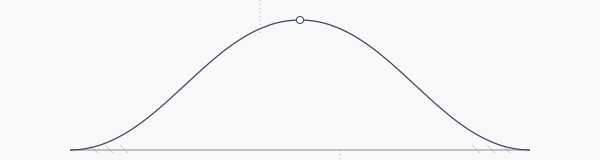
The last 2 issues assumed more open time is simply better: honest estimates protect it, a fortified block preserves it, deleting a meeting returns it. All true. But open time isn’t a resource that helps in a straight line the more of it you have. Past a certain point, it starts working against you.
The Curve, Not the Line
A 2020 study following leisure patterns across the Korean workforce found that both weekday leisure quantity and leisure satisfaction follow an inverted U-shaped curve against happiness, not a straight upward slope.1 Well-being climbed as free time increased, up to a point, then declined as free time kept increasing past it.
Too Little Daylight
Every open hour is already spoken for by the next obligation. Rest gets scheduled like a task and rushed like one.
Failure mode: chronic stress
Too Much Daylight
Open hours stack up with nothing organizing them. Momentum disappears, and the day drifts instead of unfolding.
Failure mode: aimless drift
Neither problem is solved by moving further along the same axis. Someone drowning in obligations doesn’t need infinite free time, and someone adrift in unstructured time doesn’t need less of it. Both need to find where their own curve actually peaks.
This Week: Enrich
Track your genuinely discretionary hours, the ones with no obligation attached, for 1 full week. At the end of each day, rate how the day felt on a simple scale, and look for where your own peak sits rather than assuming it matches anyone else’s.
Finding Your Daylight Curve
A 7-day tracking sheet for logging discretionary hours against a daily well-being rating, so your own peak becomes visible instead of assumed.
Download the WorksheetThe point is not to maximize free time. It’s to find the amount that actually holds up.
"To be able to fill leisure intelligently is the last product of civilization."
- Bertrand Russell